Lone worker welfare checks are one of the most routine and most important tasks a security control room runs. Across Australia, operators spend each shift confirming that guards on site are safe, recording the response, and moving to the next name on the roster. The task is simple to describe and demanding to execute perfectly at scale, and it sits at the centre of how the industry looks after isolated workers.
This guide explains what welfare checks are, why they matter, how often they typically run, where manual check-ins come under pressure, and what a reliable welfare check process looks like in a modern control room
What is a lone worker welfare check?
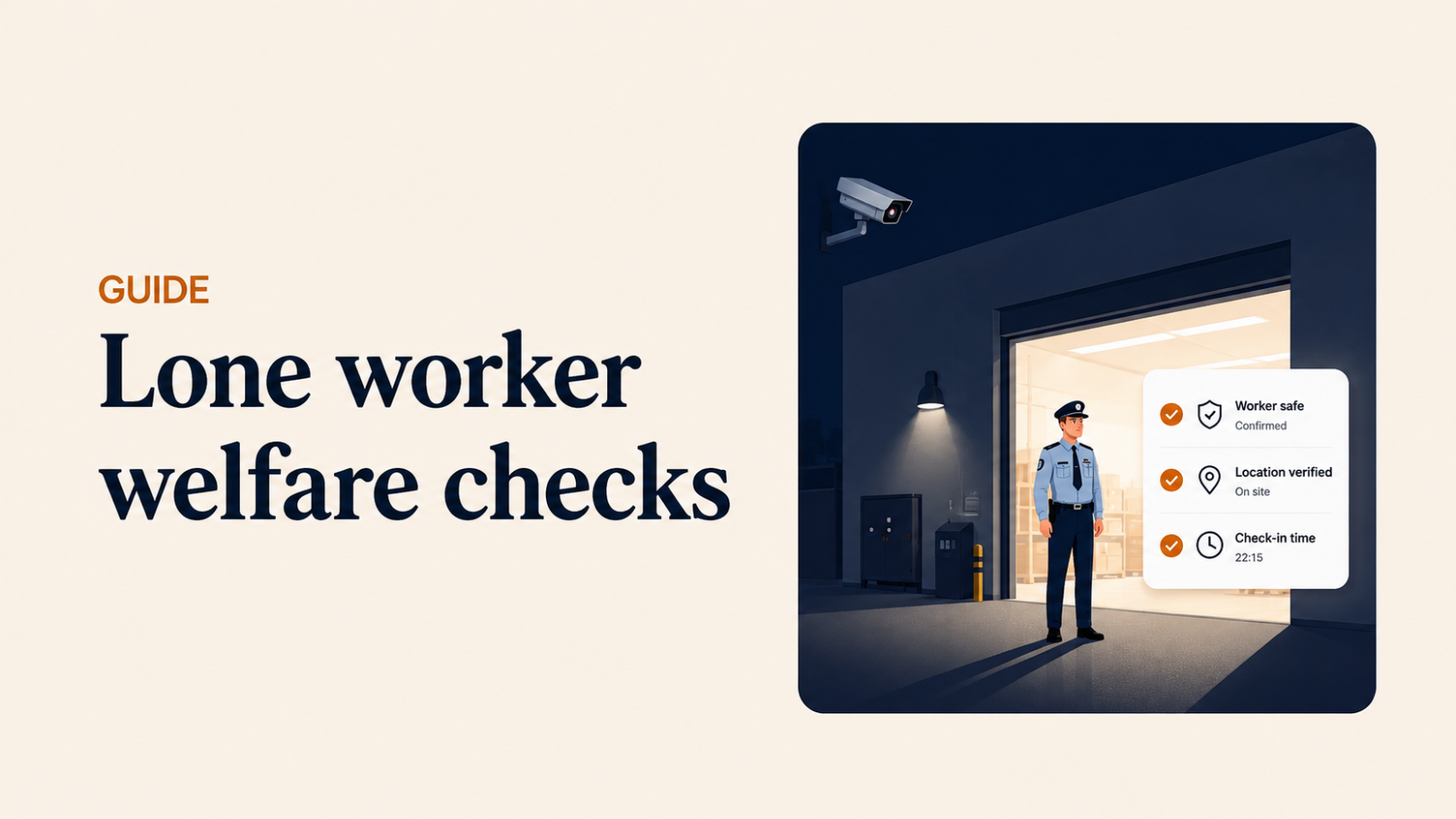
A welfare check is a scheduled contact with a worker to confirm they are safe and well during a shift. In security operations it is usually an outbound contact from a control room to a guard who is working alone, at an agreed interval, with the response recorded. If the worker cannot be reached, a defined escalation begins.
Welfare checks are a form of lone worker monitoring. They apply wherever someone works alone, remote, or isolated, which describes a large share of the guarding workforce for most of a shift, including static guards on overnight posts, mobile patrol officers moving between sites, and gatehouse staff at quiet hours.
Why do welfare checks matter in security operations?
Safe Work Australia recognises remote and isolated work as a workplace hazard, noting that people working alone can face higher risk and reduced access to immediate assistance if something goes wrong. Staying in regular contact with those workers is one of the common ways businesses look after their safety.
For a security operation, welfare check-in calls do three things at once. They give a lone guard a dependable point of contact through the shift. They create a record that contact was maintained. And they give the operator early warning when something is not right, so a concern can be acted on quickly. The specifics of what any business should do vary by state, by industry, and by the nature of the work, so obligations are always a matter for each business and its own advisers. The general principle reflected across work health and safety guidance is straightforward: keep in touch with people working alone, and have a plan for when contact is lost.
How often should welfare checks be done?
There is no single interval that applies to every situation. The frequency of welfare checks is usually set by a risk assessment that weighs the task, the location, the time of day, and how quickly help could reach the worker. Higher-risk work generally calls for more frequent checks, while lower-risk roles may need them less often.
In security operations, common patterns include hourly checks on overnight static guarding, checks tied to patrol milestones, and more frequent contact for posts or tasks assessed as higher risk. The right interval is the one that matches the assessed risk, applied consistently for the length of the shift.
How do welfare checks work in a control room?
Welfare monitoring broadly follows one of two approaches, and many operations use a mix of both.
- Worker-initiated checks. The guard confirms their own safety at set times, by tapping a checkpoint, responding in an app, or logging in and out by phone. Coverage depends on the worker remembering to act at the scheduled moment.
- System-initiated checks. The control room initiates each contact outward to the guard, confirms the response, records it, and escalates when a check is missed. Coverage depends on the system placing every scheduled contact, rather than on the worker remembering.
In both models, the same backbone matters: a clear schedule, a recorded response, and a defined path when a check fails. The difference is where the responsibility to initiate the check sits.
Where do manual welfare checks fall short?
Running welfare checks by hand works well for a small team. The strain shows as an operation grows across more sites and shifts. A control room placing check-in calls manually tends to meet the same pressures:
- Volume under load. A single operator managing a large roster has to place a high number of check-in calls on schedule, and that gets harder as sites and shifts stack up at the same time.
- Consistency across a long shift. Keeping every scheduled check on time, hour after hour, is demanding when the same operator is also handling alarms, radio traffic, and live incidents.
- Records that hold up later. Clear records of what was checked and when are valuable after any incident, and confirmation that lives only in memory or a partial log is harder to rely on.
- Escalations that stall. A missed check-in only helps if it reaches the right person quickly, and that path is easiest to break during a busy overnight shift.
These are the moments where coverage can slip, which is why reliability, not effort, is the real measure of a welfare-check process.
What does a reliable welfare check process look like?
Whatever tools a control room uses, most are aiming for the same qualities:
- Reliability under load. Every scheduled check is placed on time regardless of how many sites or shifts are running at once.
- A complete record. Each contact, response, and exception is captured and retained, so the picture is clear if it is ever needed.
- A defined response path. A missed or failed check triggers a set next step, so a welfare concern becomes an action rather than a gap in a logbook.
- Coverage that follows the roster. Checks track the live roster and shift pattern, so the right worker is contacted at the right time without manual reworking.
How does company-triggered voice calling improve welfare checks?
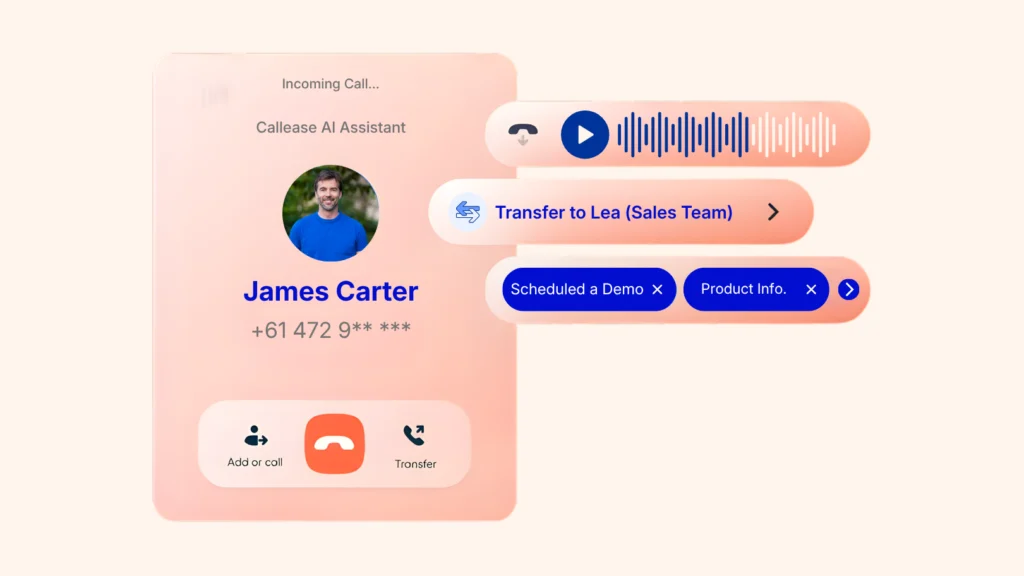
Company-triggered voice calling places the responsibility to initiate each check on the system rather than the worker. The control room’s platform calls the guard at the scheduled time, confirms presence through a spoken response, records the interaction, and escalates automatically when a check is missed or a response signals a problem.
This approach carries several practical strengths for a security operation:
- Presence is confirmed directly. A spoken response verifies the guard is present and able to answer, and the interaction is captured as a record at the same time.
- Coverage does not depend on memory. Because the system initiates every contact, scheduled checks still happen on the busiest nights and across the largest rosters.
- Exceptions drive the escalation. A missed or concerning check moves straight into a defined response path, so operators spend their attention on the situations that need a person.
- A diverse workforce is reached in language. The Australian guarding workforce is highly multilingual, and voice checks that operate across many languages help every worker understand and respond clearly.
Used alongside human operators, automated calling handles the repetitive, time-sensitive part of welfare monitoring and concentrates the human role where judgment is genuinely required.



How are control rooms modernising welfare check-ins?
Welfare checks sit where duty of care meets daily operations. Because the mechanical parts of the task, the placing, confirming, logging, and escalating of routine check-ins, are repetitive and time-critical, a growing number of control rooms are automating them. The aim is for every scheduled check to happen on time and be recorded automatically, so operators are freed to focus on the exceptions that need attention.
Automation does not remove the human role in safety. It concentrates it on the missed check, the unusual response, and the incident that needs a fast decision. The duty stays with the business either way. What changes is how reliably the process meets it, shift after shift.
Frequently asked questions
It is a scheduled contact, usually from a control room, that confirms a worker is safe during their shift and records the response. If the worker cannot be reached, an escalation process begins.
There is no universal interval. The frequency is set by a risk assessment based on the task, location, and time of day, with higher-risk work generally checked more often.
A defined escalation should follow, which typically means further attempts to reach the worker and, if needed, contacting a supervisor or arranging for someone to attend. The exact steps are set by each organisation in advance.
A welfare check is a scheduled, proactive contact to confirm safety. A personal alarm is a device a worker uses to call for help when they need it. Many operations use both together.
They are usually run from a control room or operations centre, either in-house or through a provider, with the checks placed on a schedule and escalations managed as they arise.
Yes. Control rooms increasingly automate the routine calling, confirming, and logging of welfare checks, so every scheduled check happens on time and operators can focus on exceptions.