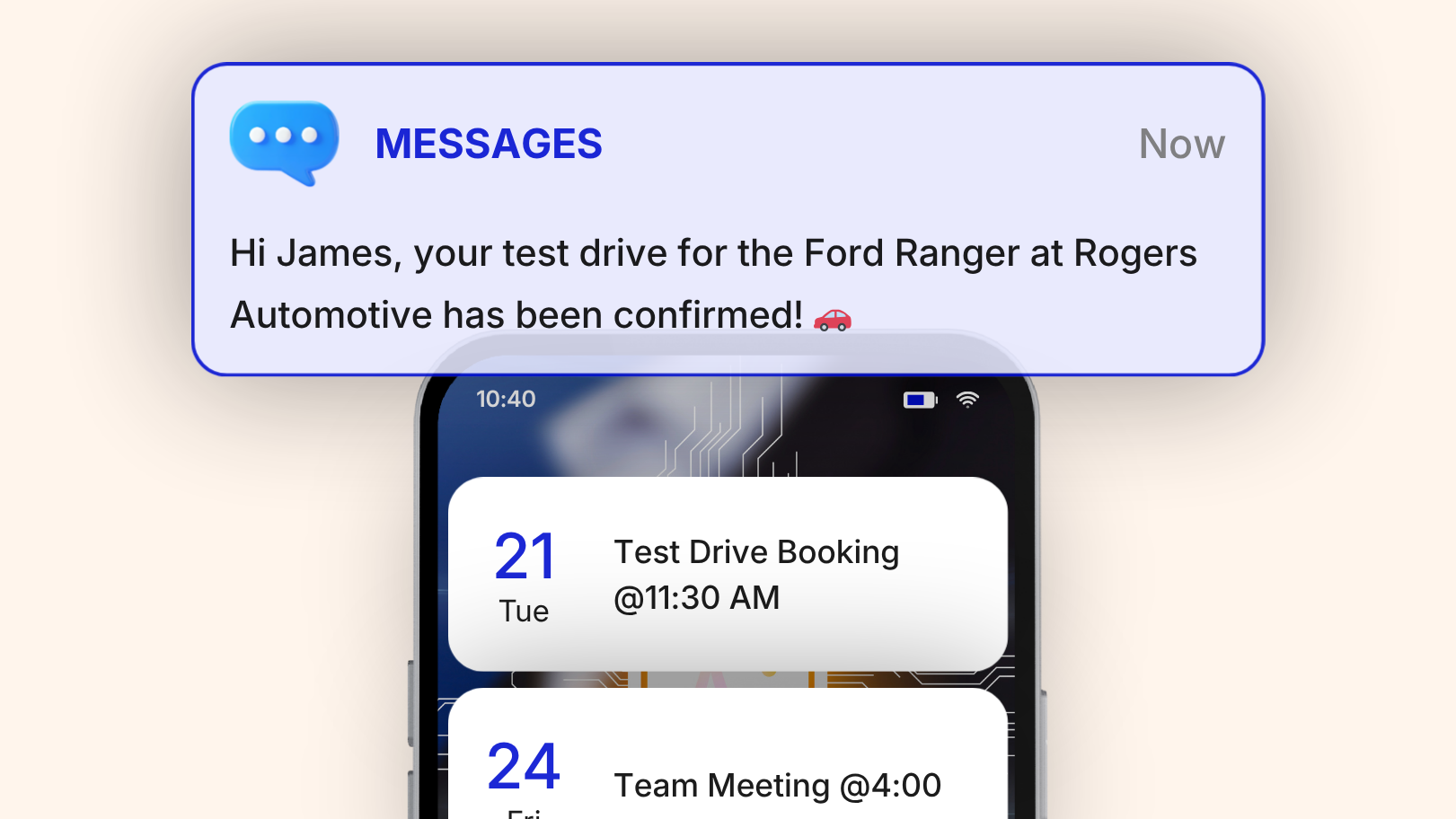
Missing appointments affects a variety of service-oriented businesses such as the healthcare industry, clinics, beauty salons, law firms, and many others. Statistics from various industries indicate that the percentage of no-shows usually ranges from 10% to 30%+. While traditional methods such as calling patients manually, sending SMS reminders, and emailing patients to remind them about upcoming appointments can be effective to a certain extent, no other method has proven to be as effective as AI appointment reminder calls. When artificial intelligence is combined with voice conversation technology, no-shows can be reduced to as low as 75%.
This article will explain the concept of AI appointment reminder calls, the reason for their superiority over traditional methods, the practices that need to be addressed, and the implementation process.
Why Patients Miss Appointments and How AI Fixes Each Cause
No-shows are often predictable and follow certain patterns. There are only a handful of reasons for no-shows, and these are often the cause for the majority of no-shows in any medical practice. The AI-powered reminder calls are designed to address each of these issues directly, rather than simply sending out a reminder and hoping for the best.
1. Forgetfulness Is the Most Common Cause
Appointments are scheduled weeks in advance, and over time, the appointments are forgotten. The reminder call the night before the scheduled appointment creates an immediate awareness in the patient’s mind, something that cannot be achieved through other means, like sending out an email or a text.
2. Uncertainty About Details Keeps Patients Home
Some patients might not have the necessary information about the date, time, location, and other requirements for the scheduled appointment. The AI-powered reminder calls provide the patient with all the information that they might need, thus eliminating the possibility of no-shows.
3. Intended Cancellations That Never Happen
Most of these no-shows consist of people who wanted to cancel but found it too much of a hassle to do so. If cancellation can be achieved by simply saying a word to a phone call, people will do it. This now allows for the time to be filled from a waiting list, creating a new revenue source with minimal additional work for the office.
4. Last-Minute Conflicts With No Easy Notification Path
When something unexpected comes up, patients do not know how to quickly contact the office to attempt to cancel their appointment. As a result, they do not show up. An AI call to the patient on the same morning can quickly allow them to attempt to cancel or reschedule the visit, preventing a loss of revenue.
5. Low Urgency Around Routine Visits
Routine visits have the highest number of no-shows because they tend to be deprioritised for most people when unexpected events come up. The personalised phone call can change the patient’s mindset about the visit because it reminds them of its importance.
How AI Appointment Reminder Calls Work
AI appointment reminder calls go far beyond automated voicemails. They are intelligent, two-way voice interactions powered by voice synthesis, natural language processing, and live scheduling integration. Understanding the core components helps explain why they consistently outperform every other reminder method in real-world practice settings.
1. Natural-sounding Voice
Today’s AI voice technology allows for natural-sounding voices that feel warm, clear, and human. The patient hears a familiar voice that announces the practice, confirms their appointment, and asks for a response. The immediacy of legitimacy keeps patients engaged, as opposed to older, robotic voice systems that tend to terminate in the first few seconds of dialling. This is one of the biggest challenges of older, outdated systems.
2. Natural Language Processing for Real Two-Way Dialogue
Whether it’s “yes,” “I need to cancel,” or “can I move this to Thursday?”, the AI voice understands the intent of the patient’s response in real time. This is one of the defining differences of a true AI voice agent versus a one-way, pre-recorded voice. This is why, when it comes to AI voice, there is a much higher rate of confirmations, cancellations, and reschedules compared to traditional text or email.
3. Direct Integration With Your Scheduling System
The AI voice integrates seamlessly with any practice management or scheduling software via API, reads the appointments, makes the call at the appropriate time, and automatically syncs every response back into the calendar. No manual entry is needed by staff.
4. Intelligent Call Flow and Automatic Outcome Routing
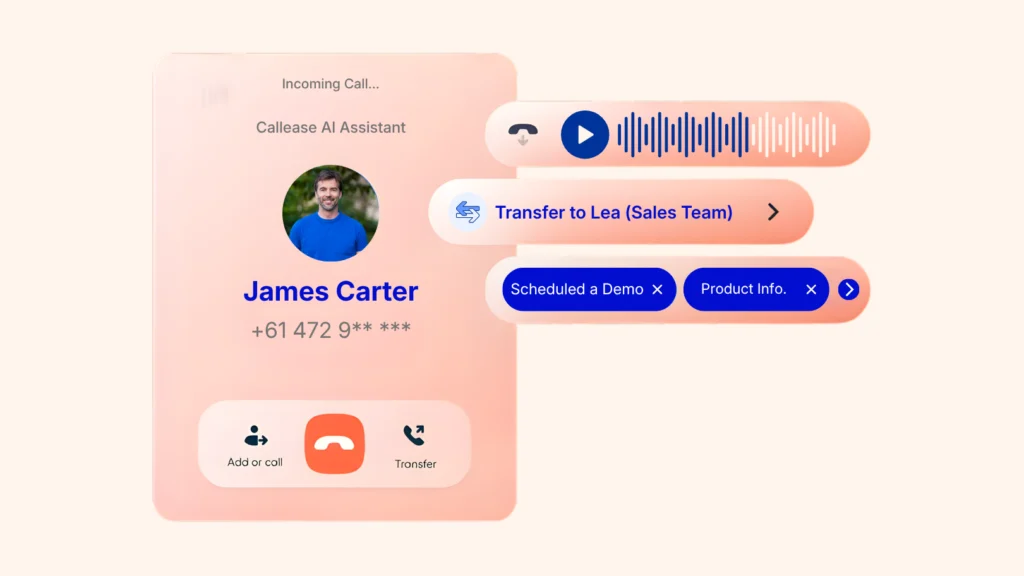
Each call follows a specific sequence. The AI voice greets the patient by name, confirms their appointment, and asks for a response. Cancellations trigger instant responses to the wait list or reschedule in real time. If no one answers, it triggers a series of automated text messages or emails to ensure no appointment is missed.
5. Multilingual Support and Personalisation
Advanced AI voice technology supports multiple languages. The practice can also insert the provider’s name, preparation instructions, and location information into each call. This is one of the most personalised features of AI voice, as it increases the likelihood of patients attending their scheduled appointments.
AI Calls vs. Traditional Reminder Methods
The table below compares AI appointment reminder calls against manual calls, SMS, and email across the factors that most directly affect no-show rates and operational efficiency.
| Feature | AI Voice Calls | Manual Calls | SMS | |
| Available 24/7 | Yes | No | Yes | Yes |
| Two-Way Dialogue | Yes | Yes | Limited | No |
| Auto-Reschedule | Yes | Manual | No | No |
| Scalability | High | Low | High | High |
| Personalisation | High | High | Medium | Medium |
| Staff Time Required | None | High | Minimal | Minimal |
| No-Show Reduction | Up to 75% | Moderate | Moderate | Low |
| Cost Per Contact | Low | High | Very Low | Very Low |
| HIPAA Compliant | Yes | Yes | Varies | Varies |
1. Manual Calls Are Personal but Cannot Scale
The personal touch of the receptionist calling the patient allows for genuine conversations, but there are obvious limitations: it is only available within office hours, uses staff time inefficiently, and becomes increasingly difficult for large numbers of appointments. As the number of appointments increases, keeping track of reminders becomes impossible without dedicating an employee solely to the task.
2. SMS Is Fast but Passive
Using SMS for reminders has the huge advantage of high open rates, but the disadvantage of no conversation. The patient receives the reminder but might not necessarily take action. There is no way to easily change the appointment date and time, no way for the patient to ask questions, and no way for the practice to have a conversation. SMS is best reserved for the second choice after the initial phone call.
3. Email Is the Weakest Standalone Option
Email is the least effective reminder choice, mainly because of the perception that the patient will not take the reminder seriously. The chances of the patient opening the email are higher at the time of scheduling, but the chances of the patient opening the email the day before the scheduled appointment are lower. Email is the least preferred choice for reminders.
4. AI Voice Delivers Scale Without Sacrificing Quality
For large practices that have many appointments each day, the AI-powered reminder system is the only choice that can match the needs of the practice. The system runs 24/7, reminding the scheduling system in real-time. The system can handle a high number of appointments without compromising the quality of the reminders.
5. Multichannel Always Beats Single Channel
The combination of the AI-powered phone reminders, SMS reminders, and email reminders gives the best results. The three channels work together to reach the majority of the patients the day before their scheduled appointments.
Common Concerns About AI Reminder Calls
Switching to an automated voice system is not a decision most practices make overnight. These are the real questions that hold businesses back from making the move.
1. Will Patients Actually Respond Well to an Automated Call?
Some clinics are afraid that the automated calls will seem too automated, too impersonal, or too intrusive. There is a genuine concern that long-time patients, who are accustomed to the friendly voice at the front desk, will push back, complain, or hang up the phone the moment they realise there is no person on the other line.
2. What If the AI Delivers Incorrect Information to a Patient?
There is a valid concern about giving an automated system the responsibility of handling patient communication. What if the AI gives the wrong date for an appointment, mispronounces the patient’s name, or gives the wrong person the wrong information? The patient will lose trust and complain, and that is difficult to recover from.
3. What Happens When a Patient Goes Off Script?
Another valid concern is that real-life conversations are unpredictable. Patients may ask questions that the automated system cannot answer, wish to change their appointments with specific doctors, or respond in ways that cannot be handled within the simple automated system. The clinic is afraid that the patient will reach a dead end in the middle of the call and hang up the phone.
4. How Safe Is Patient Data in the Hands of a Third-Party Vendor?
The sharing of sensitive patient information, such as their contact information and appointment history, is another valid concern that clinics have when using an automated system. Many clinics are unsure what questions to ask and whether the answer will be enough to protect the clinic from any potential legal liability.
5. Will the Front Desk Team Actually Get Behind It?
Even if the technology is good enough, there is a valid concern that the staff at the front desk will not support the system. The staff at the front desk who feel threatened by the automated system will find ways to circumvent the system. As seen in the case of failed software implementations in the past, getting the staff on board is just as important as the technology itself.
How Callease.AI Is Built to Address These Concerns
Most reminder tools treat voice as just another channel alongside SMS and email. Callease.AI was built from the ground up as an AI voice-first platform, designed specifically for practices and service businesses that are serious about reducing no-shows without adding to staff workload. Here is what sets us apart.
1. AI Voice Agents That Handle the Full Reminder Workflow
Our AI voice agents manage outbound reminder calls, two-way patient conversations, live cancellation processing, and automatic waitlist triggering in a single integrated workflow. When a patient cancels during a call, the slot opens, and the next person on the waitlist is notified within seconds, with no staff involvement required at any point.
2. Real-Time Scheduling Sync With Zero Manual Updates
Every call outcome syncs directly back to your scheduling system in real time. Confirmations, cancellations, and reschedules all update the calendar instantly, keeping your team informed and your schedule accurate without anyone needing to manually touch a record.
3. Compliance-Ready Infrastructure Built for Healthcare
Callease.AI is built for healthcare and regulated service environments. We support data processing agreements, compliant call logging, encrypted data transmission, and full consent management built into the platform. Opt-out preferences captured during any call sync back to the scheduling system automatically.
4. Intelligent Multichannel Fallback Sequencing
If a patient does not answer the AI call, Callease.AI automatically sends an SMS within minutes. If that also goes unengaged, an email follows as a final layer. Each fallback triggers automatically based on patient response, with no manual coordination needed from your team at any stage.
5. Deep Personalisation at Every Call
Every Callease.AI reminder call includes the patient name, provider name, appointment time, location address, preparation instructions, and department, all delivered in a natural, conversational voice. This level of detail makes each call feel purposeful and specific rather than generic, which directly increases confirmation rates.
6. Performance Dashboards That Show Results in Real Time
Our dashboards give you a live view of your no-show rate, confirmation rate, cancellation rate, and reschedule rate across every appointment and every provider. You can see exactly how the system is performing from week one and measure your return on investment with real data.
How to Get Started With Callease AI Appointment Reminder Calls
Getting started with Callease.AI appointment reminder calls is a straightforward process, and our team supports you through every step of it. The quality of your initial setup determines how quickly and consistently the system delivers results, so we focus on getting the foundations right before the first call goes out.
1. Connect Callease.AI Appointment Reminder Calls to Your Scheduling System
We start by integrating Callease.AI appointment reminder calls directly with your existing practice management or booking software. Our pre-built connectors support the platforms most practices already use, and our team handles the technical configuration so your scheduling data flows into the system accurately from day one. Bidirectional sync means every call outcome updates your calendar automatically without any manual work from your team.
2. Clean and Prepare Your Patient Contact Data
Before your first appointment reminder call goes out, we work with you to audit your patient contact records. Invalid numbers, outdated entries, and missing consent flags are identified and resolved during onboarding. This step alone can improve your call reach rate by 20% to 30% and prevent the most common early issues from affecting your results.
3. Build Your Consent and Opt-Out Workflows
Callease.AI appointment reminder calls include built-in consent management that captures and stores patient communication preferences automatically. We help you configure your intake process so that opt-in and opt-out preferences are recorded from the first patient interaction and synced across your scheduling system. Every future reminder call respects those preferences without any manual oversight required from your staff.
4. Configure Your Call Scripts and Fallback Sequences
Our team works with you to write appointment reminder call scripts that are brief, warm, and action-oriented, matching the tone of your practice and the needs of your patient population. We also configure your SMS and email fallback sequences, define your escalation timing, and set up automatic waitlist notifications for cancellations so that every appointment outcome is handled consistently from the moment your first call goes live.
5. Launch With a Pilot and Scale With Confidence
We recommend starting with a controlled pilot of Callease.AI appointment reminder calls across a defined subset of appointments before full deployment. Callease.AI provides call completion reports, outcome summaries, and no-show comparison data during the pilot so you can see the measurable impact clearly before scaling. Once the pilot confirms results, we roll out appointment reminder calls to your full patient population with scripts and settings already refined and ready to perform.
Conclusion
No-shows are a solvable problem. AI appointment reminder calls, with built-in AI appointment booking capabilities, give practices a proven, scalable, and cost-effective way to significantly reduce missed appointments, recover lost revenue, and free staff from manual outreach work. The technology is mature, the compliance path is clear, and the return on investment is measurable within weeks. For any practice ready to stop absorbing the cost of empty appointment slots every week, an AI voice reminder system with integrated AI appointment booking is the most practical and effective solution available today.