The AI-powered calling technology is revolutionizing the way businesses communicate with their customers. Businesses are now using AI voice assistants to handle incoming and outgoing calls, respond to customer inquiries, set up appointments, send reminders, follow up on payments, and even make sales calls. These tools enable businesses to save time, reduce operational expenses, and increase customer satisfaction by providing instant, human-like responses at any time of day.
Retell AI has emerged as a flexible and developer-centric AI calling solution. It enables teams to build customized voice assistants and merge telephony with sophisticated AI models. Although Retell AI is a great solution for some businesses, it also poses difficulties that cause companies to search for Retell AI alternatives. The difficulties include high technical complexity, fewer pre-built business workflows, longer time to value, and the need for other tools to handle scaling and analytics. This has led businesses to seek alternatives that can offer faster deployment, improved conversation quality, industry-ready workflows, and tangible results.
The AI calling market is full of platforms that offer human-like conversations and automation. The problem is finding solutions that offer real-world results, reliability, and usability. This is why in this article, we will talk about 10 best Retell AI alternatives that are some of the best solutions available that offer quality, speed, and business-ready functionality.
Top 10 Retell AI alternatives for 2026
Below, we present the top 10 Retell AI alternatives for 2026, starting with Callease.ai, which stands out as a strong solution for businesses seeking results without excessive technical complexity.
1. Callease.ai – Best for Human-Like Conversations
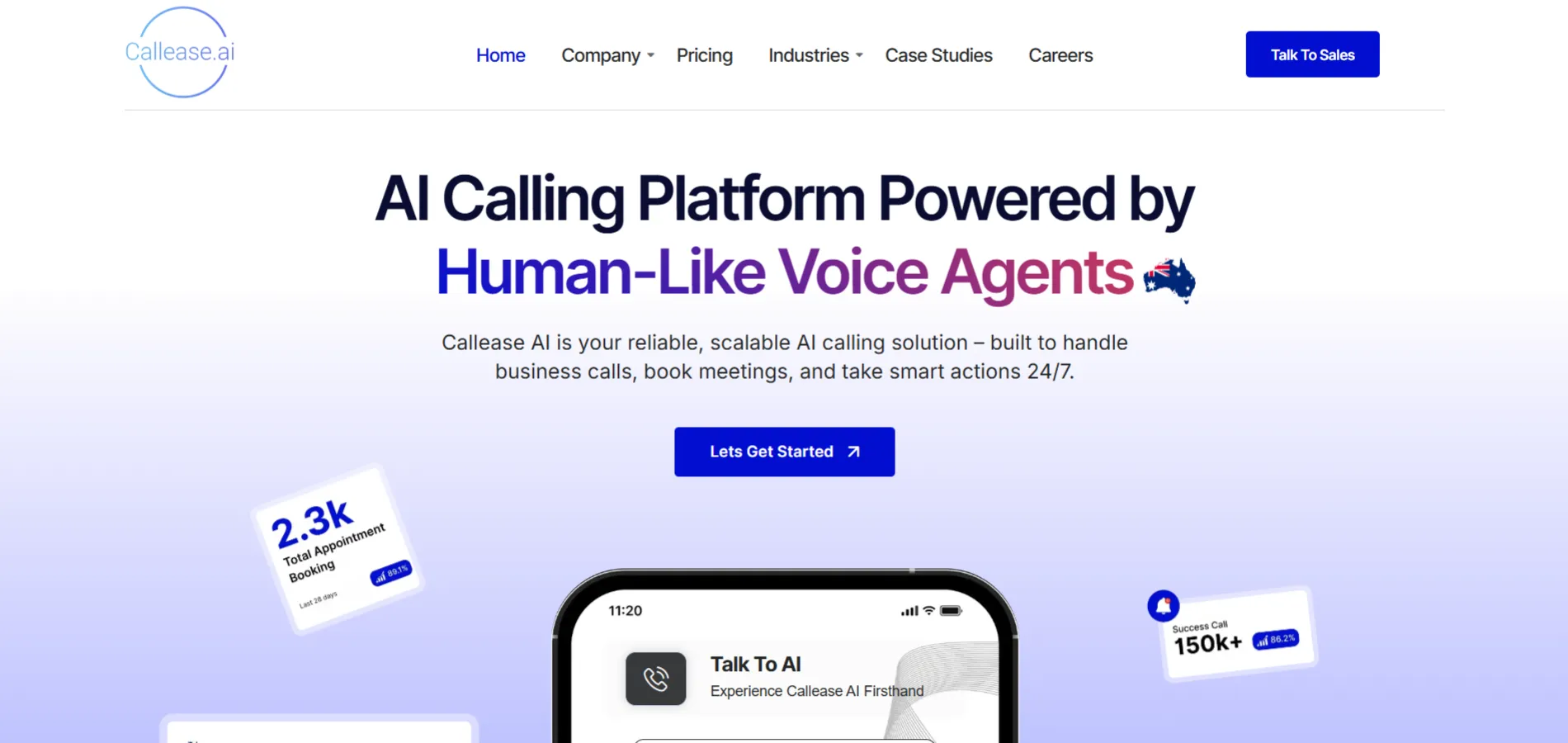
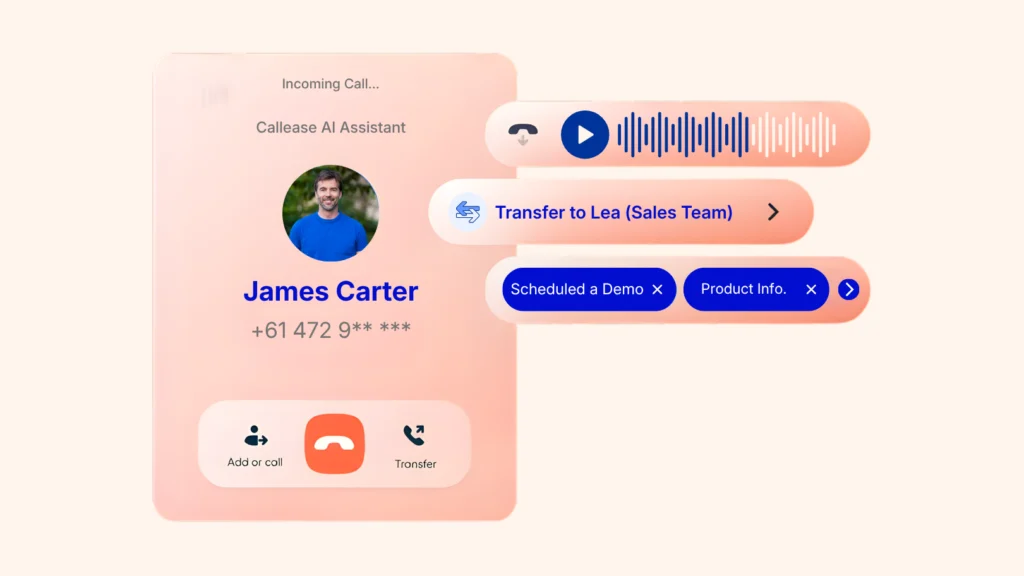
Callease.ai is an AI voice agent that enables the automatic handling of customer calls. The platform serves as a virtual receptionist that handles both incoming and outgoing calls with human-like conversations. Callease.ai is capable of answering customer inquiries, setting up appointments, following up with customers, and directing calls effectively. The platform is integrated with CRM, calendar, and other business applications, making it possible for businesses to automate their phone conversations while still having a personal touch that does not require a huge call center staff.
Strengths
- Handles calls autonomously with natural, human-like conversations
- Can manage inbound queries, outbound follow-ups, and appointment scheduling
- Integrates with CRMs, calendars, and business systems for seamless workflows
- Supports personalized conversations to improve customer engagement
- Automates repetitive tasks, reducing operational costs and team workload
Limitations
- Advanced integrations may require an initial setup time
- Some niche workflows may need minor configuration
- Best performance is achieved when call scripts are structured clearly
2. Synthflow – Best No-Code Voice AI Builder
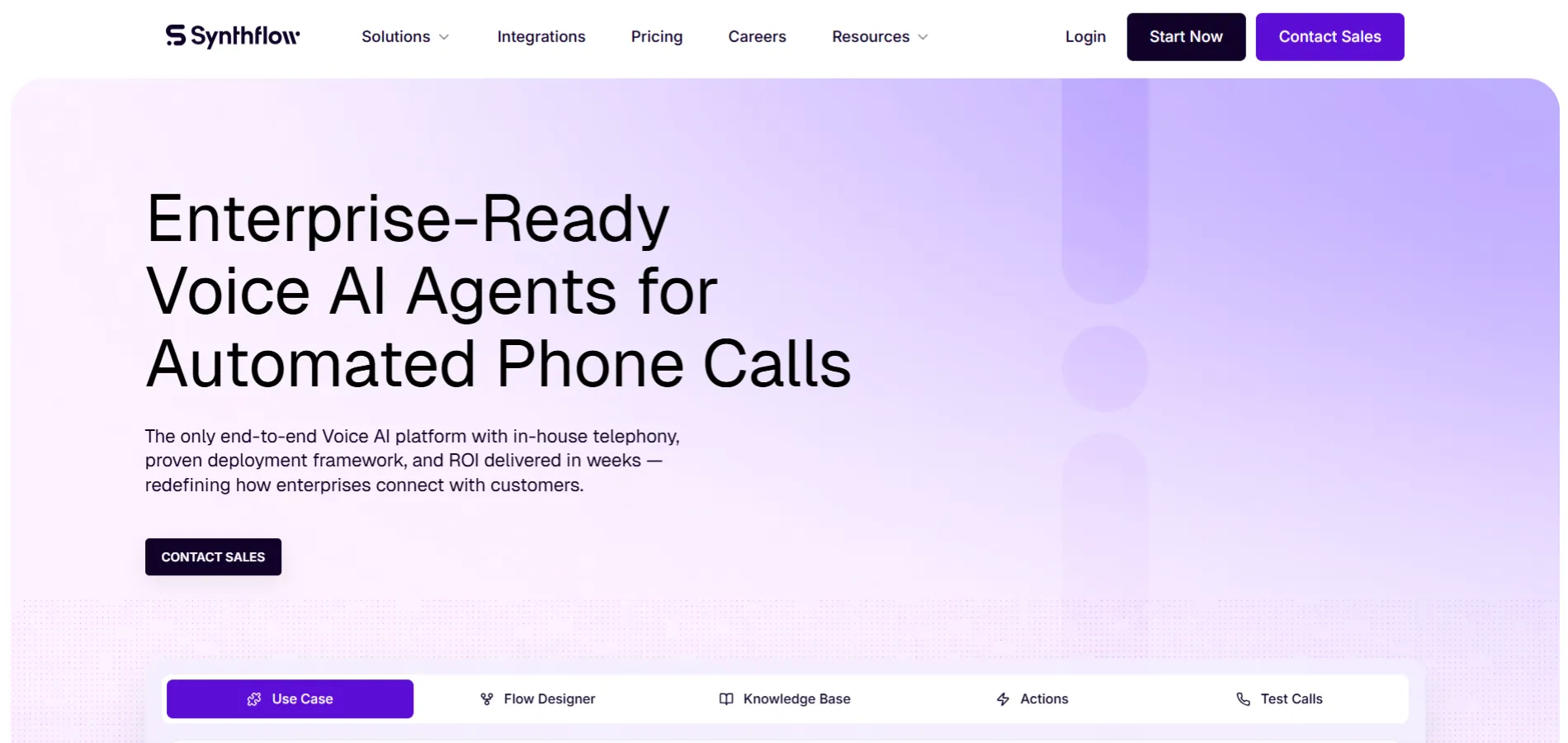
Synthflow is intended for teams that need to build AI voice assistants without coding. It comes with a visual workflow builder, which enables users to easily create conversational flows. The tool is best for inbound automation, such as answering calls, routing inquiries, and addressing FAQs. Although Synthflow is great for rapid deployment, it is not as flexible when it comes to complex outbound campaigns and dynamic conversations.
Strengths
- Visual, drag-and-drop interface that eliminates the need for coding
- Rapid deployment makes it ideal for small teams or agencies
- Good for inbound automation tasks such as routing and FAQs
- Provides analytics to monitor call performance and improve workflows
- Allows easy integration with basic CRM systems
Limitations
- Limited flexibility for complex outbound call campaigns
- May struggle with unscripted or highly dynamic conversations
- Less suitable for industries requiring compliance and detailed record keeping
3. Bland AI – Best for High-Volume Calling
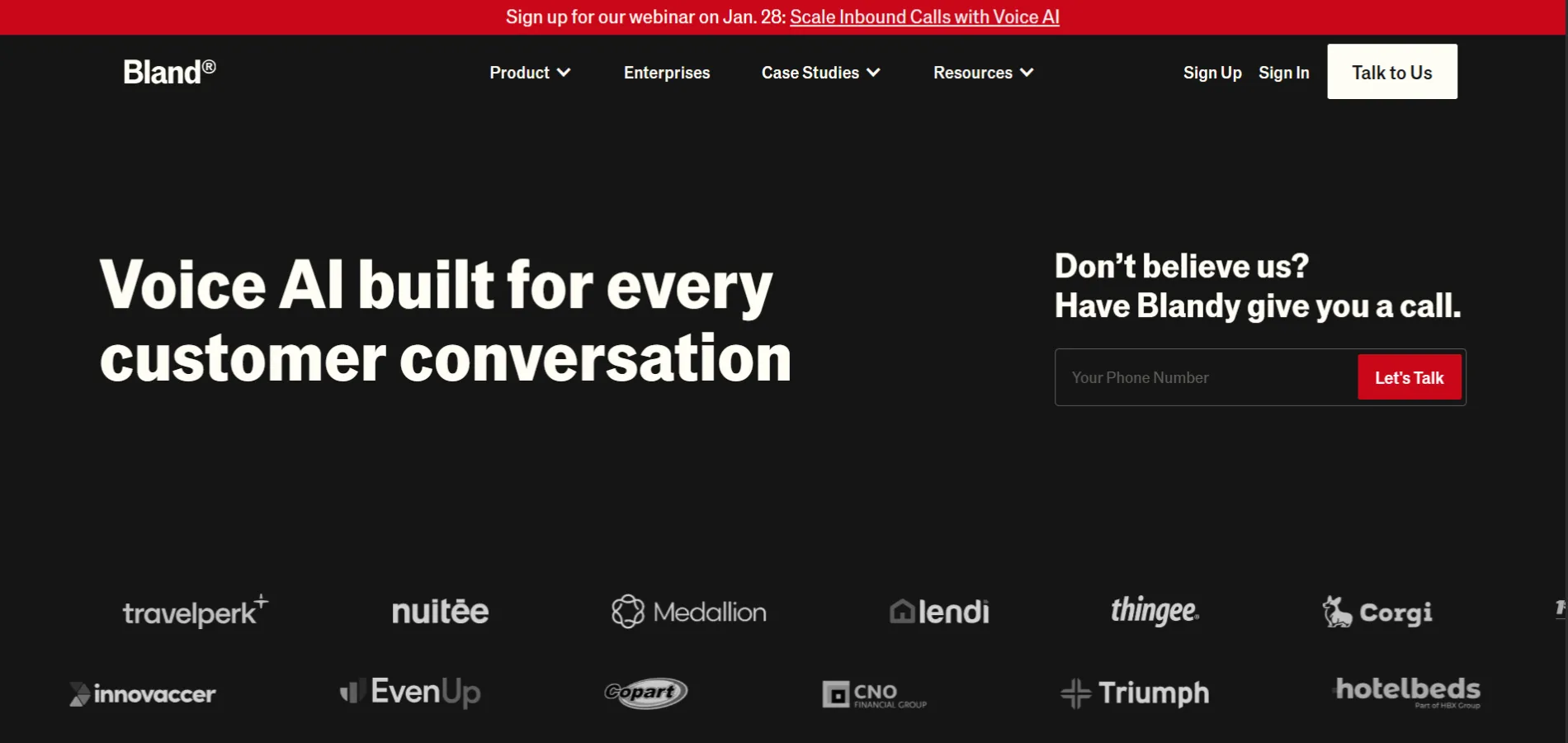
Bland AI is intended for large-scale call centers, making it a great tool for teams that need to execute outbound campaigns with consistent call delivery. It is reliable even in high-volume call scenarios and ensures predictable results. This tool is best for teams that have structured outbound calling requirements, such as confirmations, reminders, and surveys. Although Bland AI is great for handling scale, it is not as concerned with conversational intelligence and complex business logic.
Strengths
- Handles high call volumes efficiently without delays or drops
- Reliable delivery ensures consistency for outbound campaigns
- Ideal for structured interactions such as surveys, reminders, and confirmations
- Provides basic reporting and analytics for campaign performance
- Can integrate with CRM and telephony systems for automated workflows
Limitations
- Conversations can feel scripted and lack natural flexibility
- Limited support for inbound or highly adaptive calls
- Less emphasis on pre-built business workflows compared to some competitors
4. Vapi- Best Developer-Centric Alternative
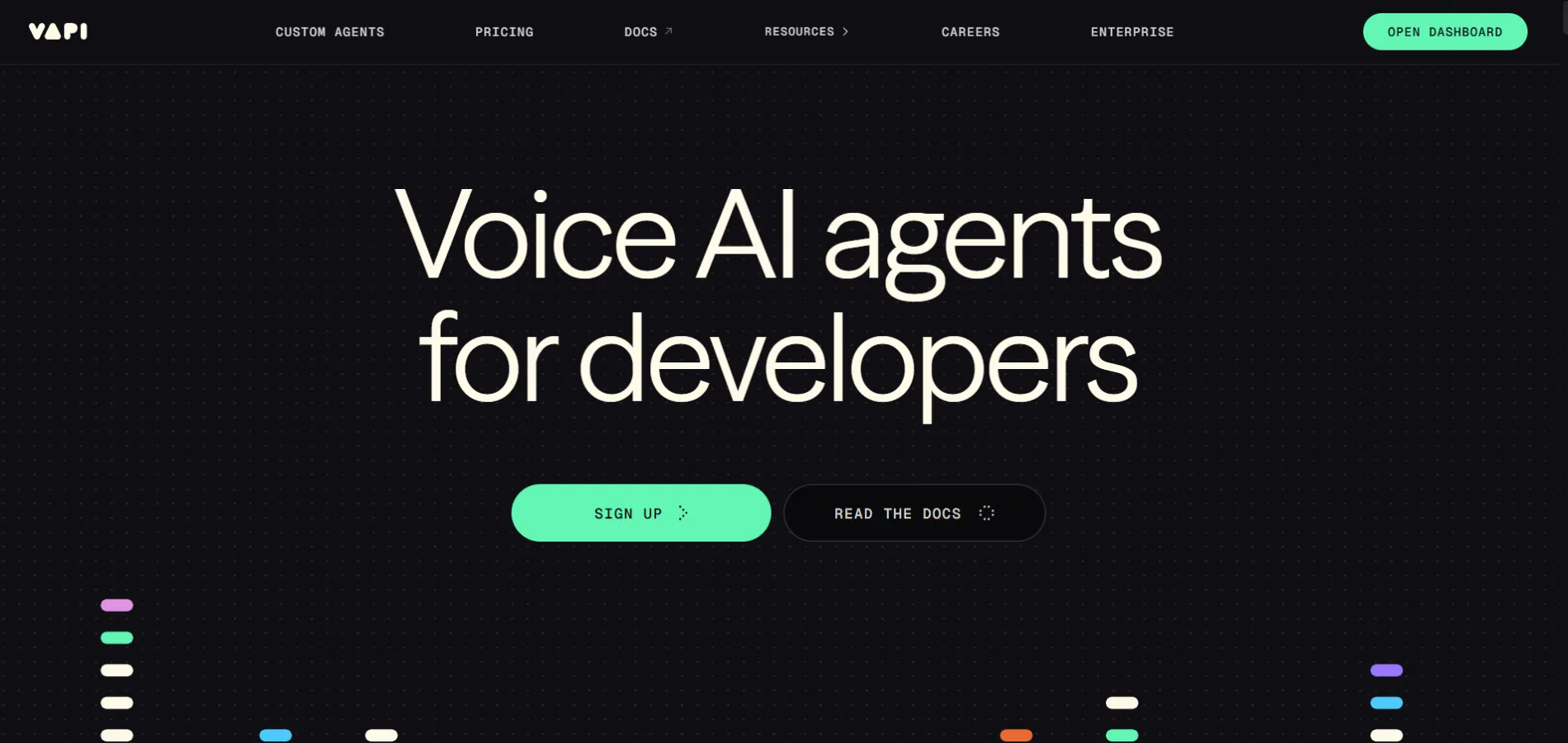
Vapi is an AI calling solution that is developer-centric and enables complete customization of voice bots. It enables developers to handle components like large language models, speech recognition algorithms, text-to-speech engines, and telephony components. Vapi is very flexible and can be customized to suit specific business requirements. However, it requires highly advanced technical skills and does not provide ready-to-use business workflows.
Strengths
- Highly customizable for teams with advanced development capabilities
- Allows selection of AI, speech, and telephony components to optimize performance
- Supports experimental and complex workflows for unique business scenarios
- Can integrate with a variety of enterprise systems through APIs
- Ideal for companies that want to build proprietary AI calling solutions
Limitations
- Requires significant technical resources to deploy and maintain
- No pre-built workflows for business operations, which can slow time to value
- Not ideal for non-technical teams seeking plug-and-play solutions
5. AutoCalls.ai – Best for Simple Outbound Automation
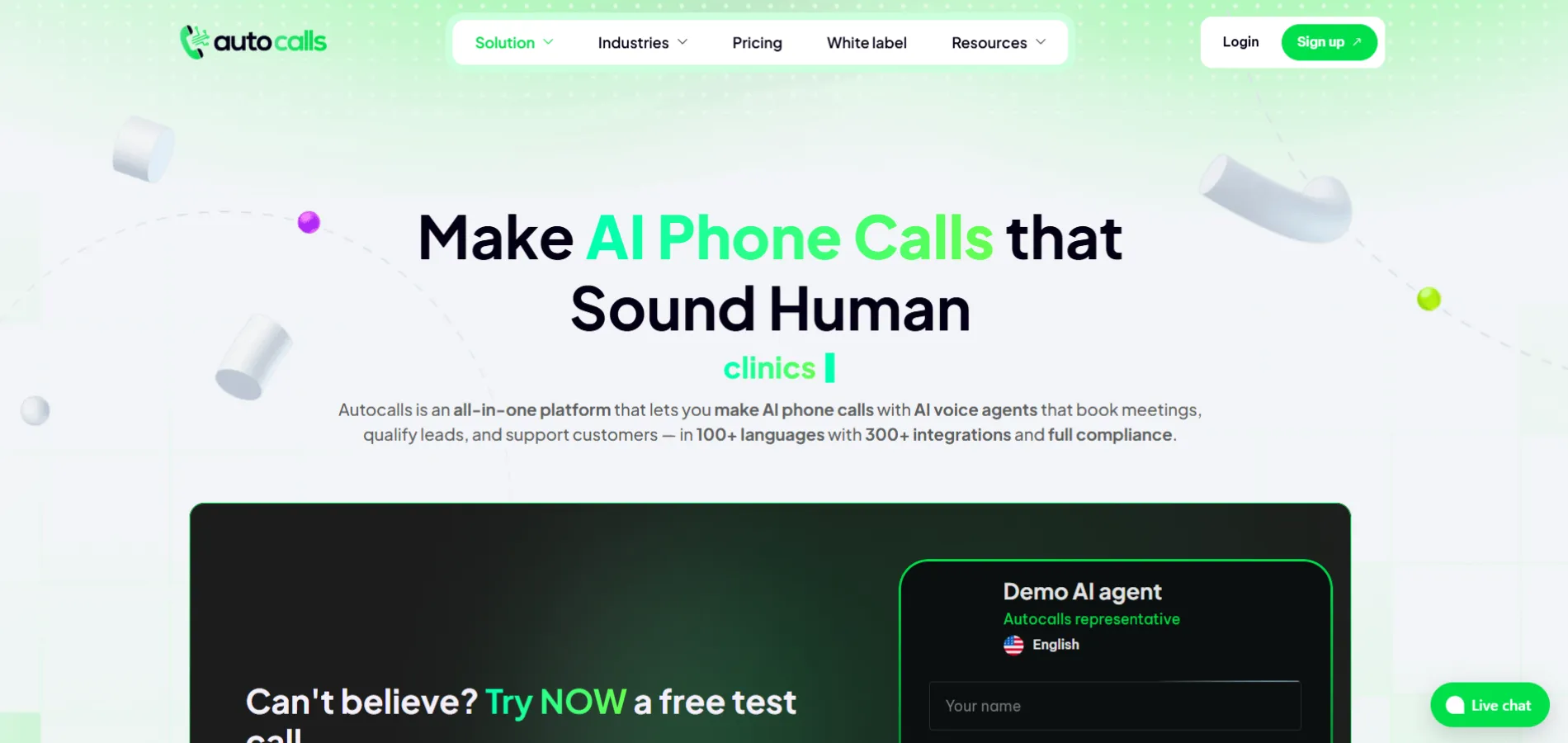
AutoCalls.ai is developed for simple outbound calling operations. It is best suited for reminders, notifications, and broadcast messages. The solution enables businesses to send messages at scale without hiring more staff, making it a very cost-efficient solution for simple operations. However, it is not suited for complex two-way conversations.
Strengths
- Quick deployment for outbound reminders, alerts, and notifications
- Scales efficiently for high-volume campaigns
- Low-cost solution for businesses with simple outbound calling needs
- Provides reporting for message delivery and response tracking
- Minimal technical setup required
Limitations
- Limited ability to handle open-ended conversations
- Not suitable for sales, customer support, or complex interactions
- Does not provide advanced analytics or workflow customization
6. CallFluent – Best for Structured Conversations
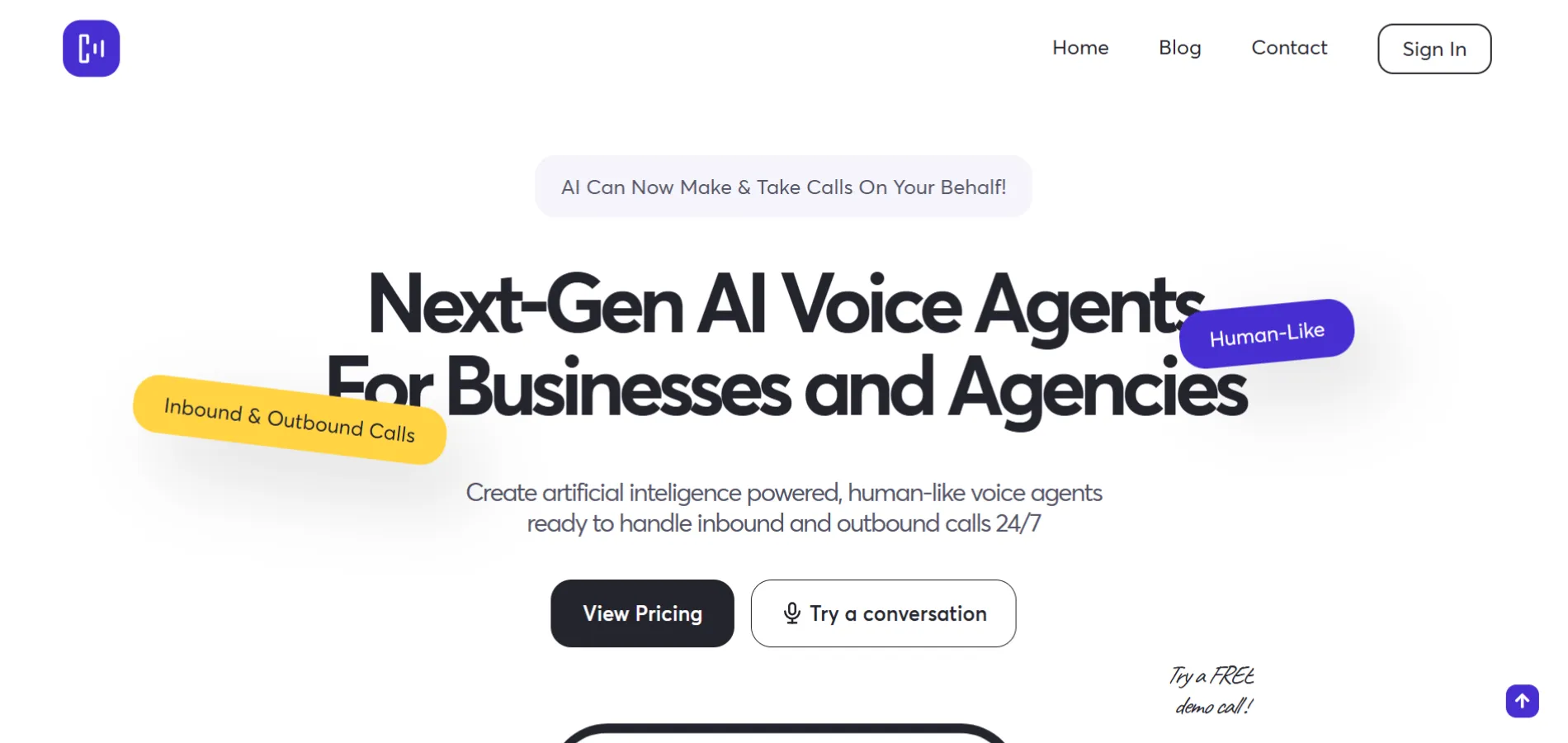
CallFluent is great at handling scripted or structured conversations. It is most beneficial for intake calls, surveys, and confirmations where the conversation flow is predictable. The system has good speech recognition and conversation flow. CallFluent is not ideal for dynamic conversations or unscripted conversations.
Strengths
- Provides structured conversation flows that reduce errors
- Strong speech recognition for consistent performance
- Reliable for surveys, confirmations, and intake processes
- Easy to monitor and optimize call scripts
- Integrates with telephony systems for seamless operation
Limitations
- Limited adaptability to unscripted conversations
- Requires manual tuning for unexpected inputs
- Less effective for complex outbound campaigns

7. Goodcall – Best for Small Businesses
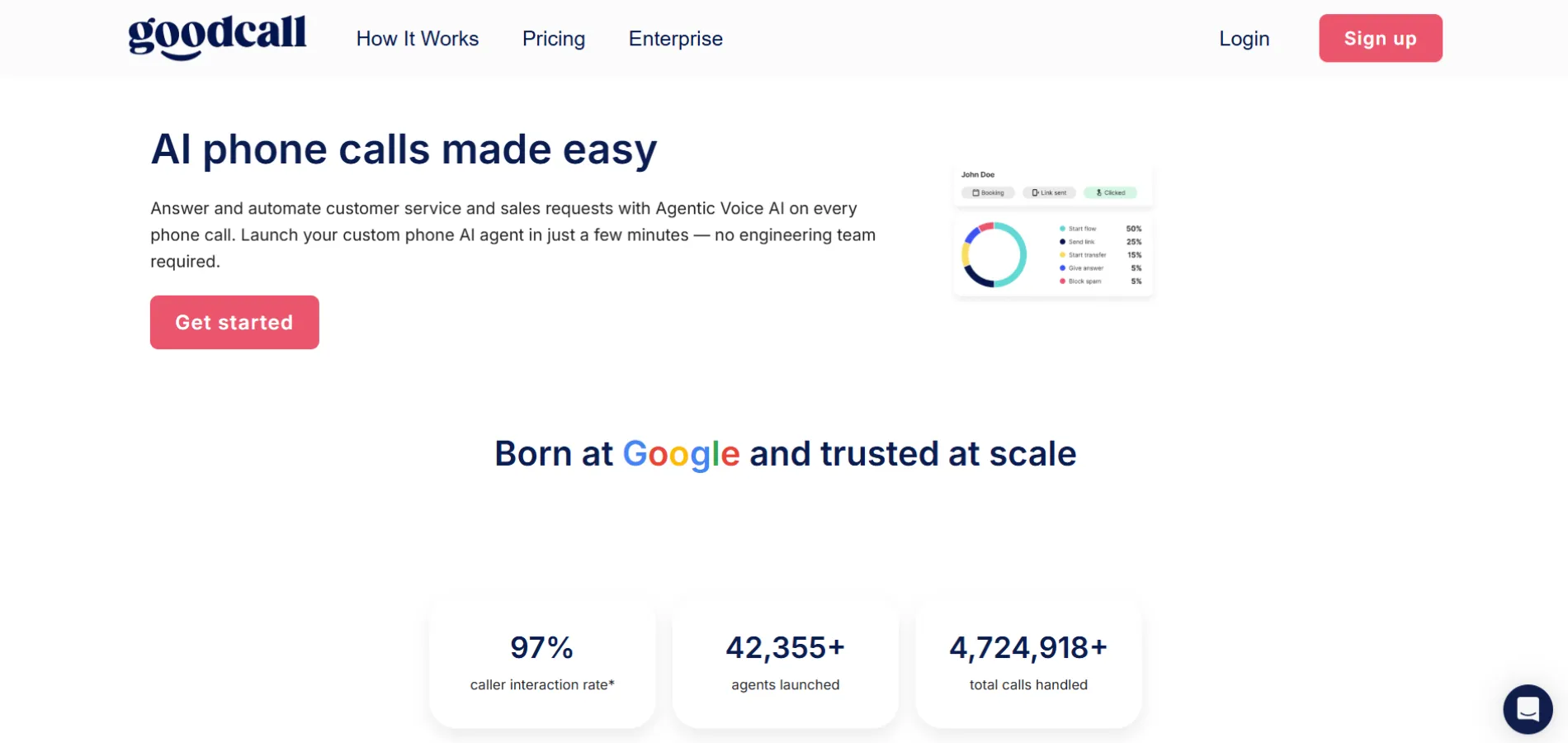
Goodcall is best for small businesses that require a straightforward AI phone assistant. It is capable of handling basic inbound and outbound calls, storing messages, and answering frequently asked questions. Goodcall is easy to use and set up, but lacks scalability and business workflow functionality.
Strengths
- Very easy to deploy with minimal technical knowledge
- Handles common questions and basic call management efficiently
- Suitable for small teams or local businesses
- Provides message capturing and simple follow-up workflows
- Low-cost solution for basic AI calling needs
Limitations
- Limited scalability for larger businesses
- Only basic workflow automation
- Not designed for high-volume outbound campaigns or complex interactions
8. PolyAI – Best Enterprise-Grade Voice Experience
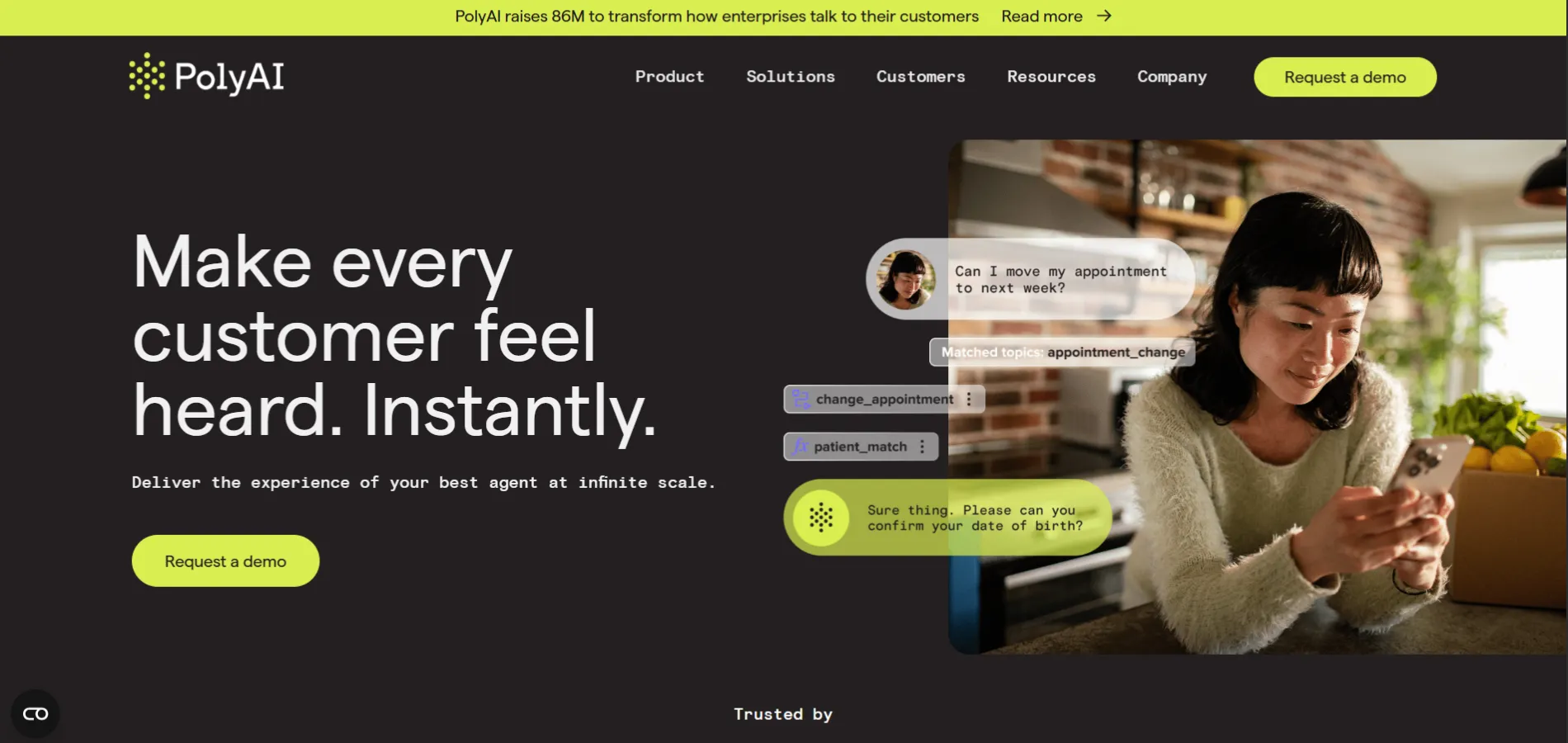
PolyAI provides very natural-sounding, human-like voice experiences for enterprise contact centers. It is designed for complex customer service use cases and can support high volumes of calls. PolyAI is best suited for businesses that value high-quality voice experiences and analytics. However, it is more expensive and has a longer setup time.
Strengths
- Excellent natural-sounding voice quality
- Handles complex support and sales conversations
- Scales effectively for enterprise-level call volumes
- Provides advanced analytics and reporting features
- Supports multiple languages and regional accents
Limitations
- High cost may not suit smaller businesses
- Requires longer onboarding and setup
- Less accessible for teams without dedicated technical or operational support
9. Nurix AI – Best for Custom AI Integrations
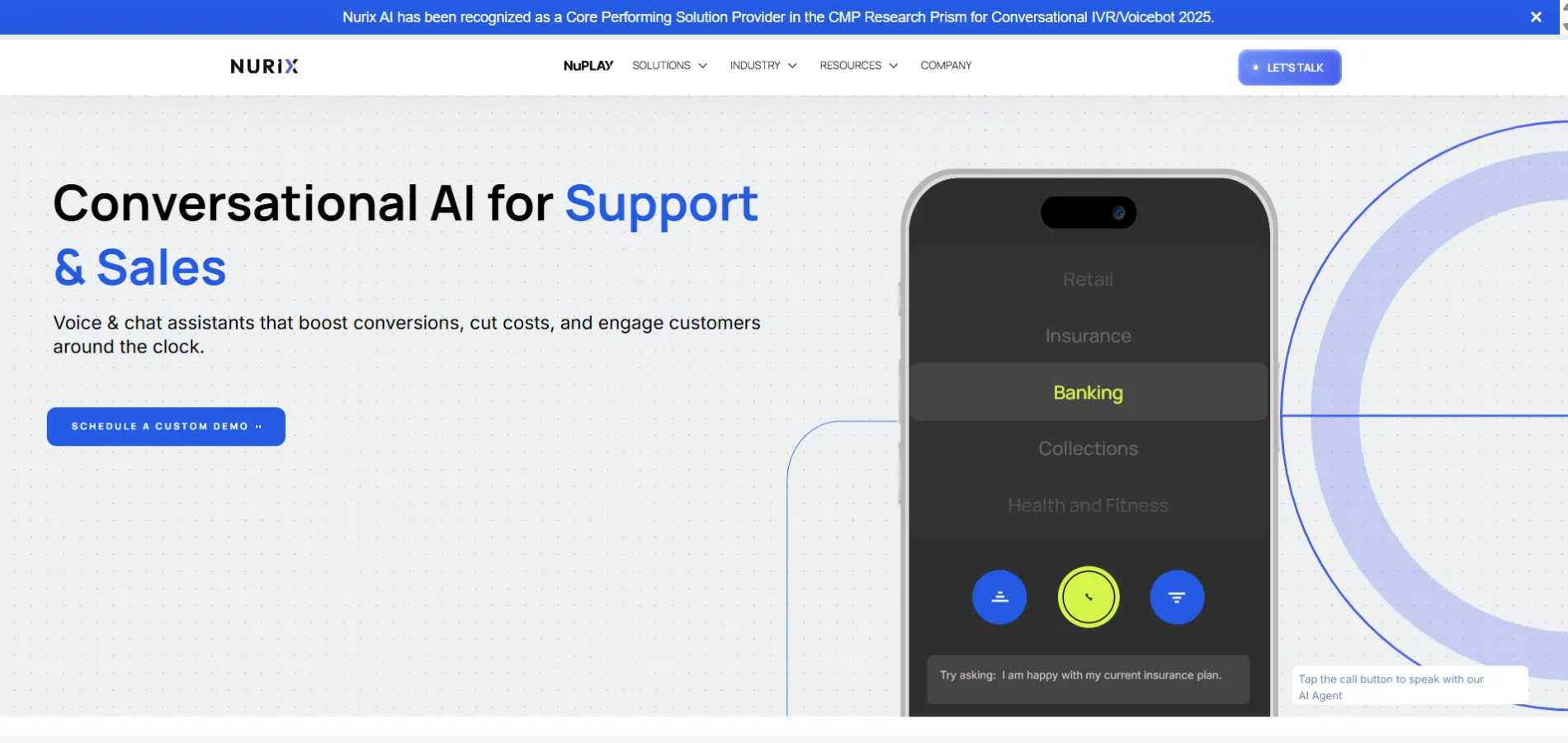
Nurix AI is designed for AI automation and can support voice calling as part of a larger workflow. It enables businesses to use voice AI together with other AI systems for complex tasks. Nurix AI is flexible but needs to be set up and configured, which makes it more suitable for businesses with technical capabilities.
Strengths
- Flexible AI integration for complex workflows
- Can combine voice AI with other automation systems
- Allows customization for unique business processes
- Provides analytics to track workflow performance
- Supports multi-channel automation
Limitations
- Requires technical setup and configuration
- Not voice-first by design, so deployment may take longer
- Limited pre-built business calling workflows
10. Voiceflow – Best for Conversation Design
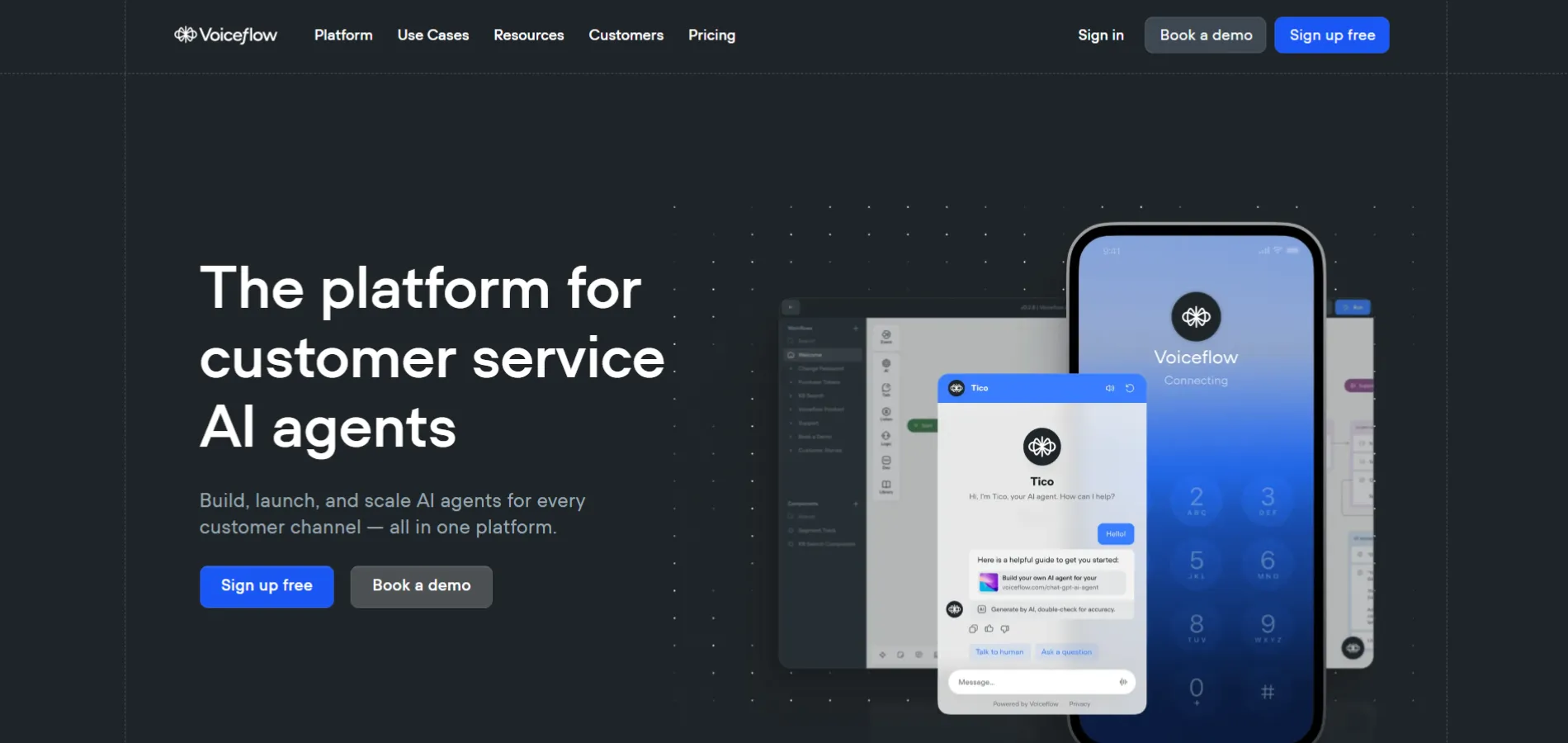
Voiceflow is a conversational design platform that enables businesses to build and test voice and chat conversations. Voiceflow is very effective for designing conversations, but it needs additional telephony infrastructure to support live calls.
Strengths
- Excellent conversation design and prototyping tools
- Supports both voice and chat interactions
- Allows testing of workflows before deployment
- Provides collaboration tools for teams to design conversations
- Integrates with APIs for custom functionality
Limitations
- Not a complete AI calling solution by itself
- Requires additional setup to manage live calls
- Limited pre-built business workflows
Note: The alternatives listed here are based on reviews and information from various sources. This article is meant to provide an overview and is not intended to diminish or favor any platform.
A Quick Side-by-Side Comparison
| Platform | Deployment | Conversation Style | Business Workflow | Ideal Use Case |
| Callease.ai | Quick, ready-to-use | Human-like and natural | Pre-built for sales, support, bookings, and collections | Businesses seeking outcomes without coding |
| Synthflow | Very fast | Moderate, inbound-focused | Visual no-code workflows | Non-technical teams testing AI calling |
| Bland AI | Moderate | Scripted, predictable | Limited workflows | High-volume outbound campaigns |
| Vapi | Slow, requires dev | Highly customizable | Minimal | Technical teams building custom AI agents |
| AutoCalls.ai | Very fast | Basic outbound | Minimal | Alerts, reminders, simple notifications |
| CallFluent | Moderate | Structured and reliable | Scripted call flows | Surveys, confirmations, and intake calls |
| Goodcall | Fast | Basic | Basic workflow | Small businesses with low-volume calls |
| PolyAI | Slow | Enterprise-level natural | Advanced enterprise workflows | Large contact centers |
| Nurix AI | Moderate | Flexible | Customizable | Complex workflow integration |
| Voiceflow | Moderate | Prototype-level | Needs telephony integration | Conversation flow design and testing |
How to Select the Best AI Voice Assistant for Your Business
After discussing all of these alternatives, you might get confused about which will be best for your business. That’s why, before choosing any AI calling platform, it is necessary to align the tool with your business requirements. The following points should be considered:
Purpose of Use: Determine what purpose the AI assistant needs to serve, such as sales, customer service, appointment setting, reminders, or collection. Selecting a tool for your purpose will help you derive maximum benefit.
Speed of Deployment: Depending on the tool, there may be pre-built workflows for rapid deployment or need to be set up and tested. Rapid deployment is useful for urgent marketing campaigns.
Level of Conversation Complexity: Assess whether the calls are primarily scripted or need dynamic and adaptive conversations. Complex conversations require AI that can understand the context and respond accordingly.
Integration Needs: Verify that the tool integrates well with your CRM, calendar, or ticketing system. Seamless integration will minimize manual efforts and maintain data consistency.
Human escalation: Even the most advanced AI may have to escalate a complex search to a human. Smooth escalation is essential to ensure a seamless customer experience.
The ideal AI voice assistant will strike a balance between ease of use, conversation quality, and integration capabilities to help your business automate calls while still adding a personal touch.
Why Callease AI is the Best Retell AI Alternative
Callease AI receptionist differentiates itself in the market by prioritizing business results over technical sophistication. The most notable reasons why it is the best alternative to Retell AI are:
Ready-to-use AI Agents Designed for Practical Business Applications
The AI agents are ready to use and can immediately perform sales follow-ups, scheduling, reminders, and support activities without requiring extensive setup and configuration.
Human-like Conversations That Enhance Customer Engagement
The AI agents communicate in a human-like manner, providing a personalized experience that fosters trust, customer satisfaction, and a human touch even in automated conversations.
Smooth CRM, Calendar, and System Integration
Callease.ai ensures that all call information, customer interactions, and activities are perfectly integrated and synchronized across different systems, minimizing the need for manual processing and keeping your business organized.
Human Escalation for Unusual Situations
Calls that are beyond the capabilities of the AI are handled seamlessly and efficiently transferred to a human agent, ensuring that complex situations are addressed without frustrating the customer.
Fast Deployment With Enterprise Reliability
Companies can easily scale their AI calling services, knowing that the solution is reliable and can handle a large number of calls efficiently.
For companies looking for a comprehensive AI calling solution that is easy to use, conversational, and delivers results, Callease.ai is the best alternative to Retell AI in 2026.

Conclusion
The future of business communication is rapidly being driven by AI voice agents. Tools such as Callease.ai show that businesses can leverage human-like conversations, automation, and smooth workflows to improve customer engagement and operational efficiency. By selecting the correct Retell AI alternative, businesses can automate mundane tasks, minimize operational expenses, and concentrate on high-value conversations.
With the continued evolution of AI calling technology, the future holds even more intelligent conversations, tighter integration with business systems, and predictive analytics that can forecast customer needs. By investing in a reliable AI answering services today, your business will be ready not only for the present but for the future of customer communication.